What if your Golfito home felt cool, dry, and effortless year-round, even in peak rainy season? In a coastal rainforest, comfort and longevity start with smart design choices. You want breezy rooms, protected outdoor spaces, and materials that stand up to constant moisture and salt. In this guide, you will learn the proven strategies that work in Golfito’s climate so your home performs beautifully for years. Let’s dive in.
Why Golfito needs rainforest-ready design
Golfito has a tropical rainforest climate with warm temperatures, very high humidity, and frequent heavy rainfall. Coastal exposure adds salt spray, which increases corrosion on metal components. Dense vegetation and fast regrowth keep ground-level areas shaded and damp.
On many lots, you also face flood risk, slope instability, or storm surge in low-lying coastal areas. Insects and wood-destroying pests are common, and moisture can drive mold and mildew indoors. A resilient plan starts by recognizing these conditions and designing for them.
Site and orientation basics
Capture breezes with cross-ventilation
Align main living areas to prevailing winds and place openings on opposite walls to create cross-ventilation. Combine low and high openings, like lower windows with transoms or clerestories, to promote stack ventilation. Use large operable windows and screened walls to expand living space without letting insects in. Add ceiling fans in interiors and covered outdoor rooms for efficient cooling in humid air.
Elevate for safety and comfort
If a site is flood-prone or seasonally wet, elevate the primary living floor on piers, a raised slab, or engineered fill above local flood levels. Keeping the structure off the ground also helps airflow and reduces moisture around sub-floor assemblies. Include vapor barriers and capillary breaks under slabs and where foundations meet walls to limit ground moisture transfer.
Roofs, shade, and outdoor rooms
Choose a steep, simple roof
Steep roof pitches with simple planes shed heavy rain better than complex low-slope designs. Durable metal or tile cladding performs well when paired with quality underlayment and robust flashing details. Ventilate the roof assembly with ridge vents or channels to release heat and moisture. Size gutters and downspouts for intense rainfall, and keep them easy to access for frequent cleaning.
Shade and overhangs that work
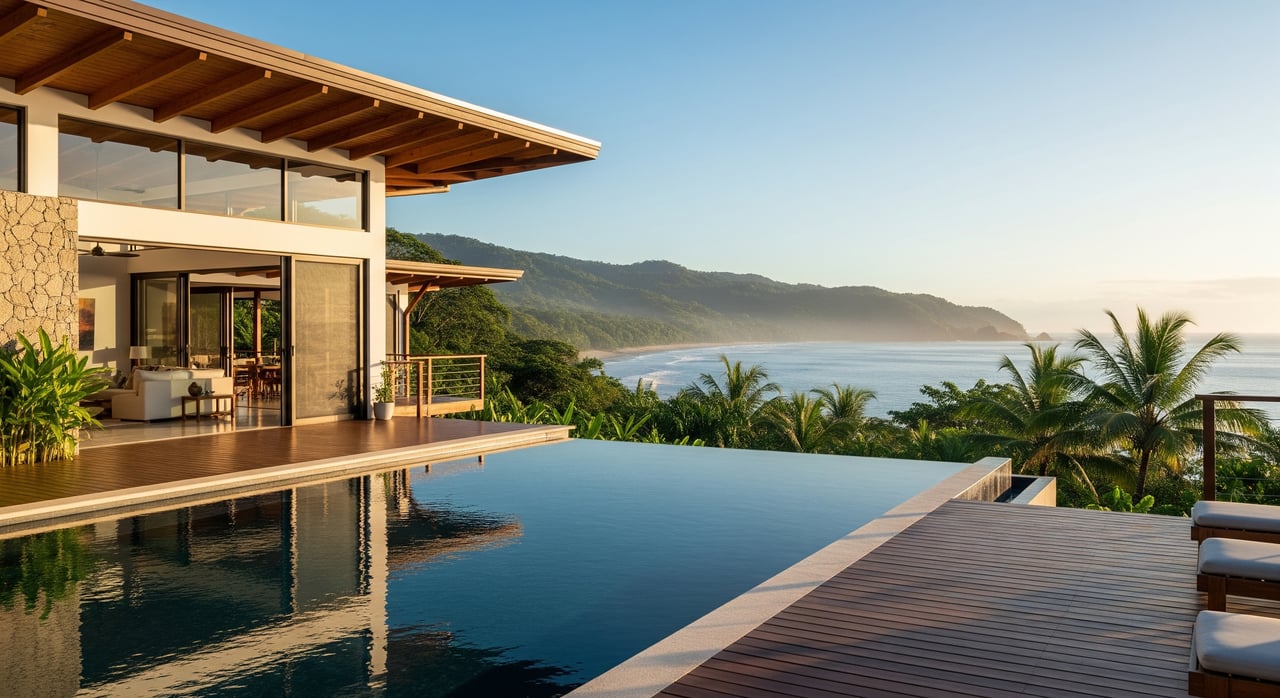
Deep overhangs, wide porches, and covered walkways protect walls, windows, and outdoor living areas from sun and driving rain. Designers typically calibrate overhang depth to block high sun angles while preserving views. Use adjustable shading such as louvers, shutters, or sliding screens so you can fine-tune light, privacy, and weather protection.
Screened living without insects
Screened porches or outdoor rooms let you enjoy the setting year-round while limiting mosquitoes. Choose corrosion-resistant frames like aluminum or stainless steel and durable mesh, such as fiberglass or stainless. Keep floors subtly sloped and use water-resistant finishes so these spaces stay usable during heavy rain.
Materials that stand up to moisture
Structure that suits your plan
Concrete offers durability and termite resistance, especially on sloped sites, but it needs good detailing for thermal comfort and crack control. Timber construction can be fast and comfortable when detailed to shed water and dry out, and when you choose durable species or treated wood. Steel can be efficient, but specify hot-dip galvanizing or stainless components and isolate metal from treated timber and salt exposure.
Woods and finishes that last
Use naturally durable tropical hardwoods or pressure-treated timber for exposed elements like decks and fascia. Where possible, verify legal and sustainable sourcing, such as certified suppliers. For cladding and decking, consider thermally modified wood or engineered hardwoods with proven rot resistance. In kitchens and baths, use moisture-resistant cabinetry materials and elevate plinths to avoid contact with wet floors.
Metals and coatings near the coast
Select corrosion-resistant metals for hardware and fasteners, such as stainless steel 316 near the shoreline. When stainless is not feasible, use hot-dip galvanized steel specified for coastal conditions, and plan on periodic recoating. Choose high-quality exterior paints with mildew inhibitors, elastomeric coatings for exterior walls where appropriate, and coastal-grade paints for metal roofs. Expect shorter repainting cycles than in drier climates and budget accordingly.
Water, drainage, and utilities
Manage rain on site
Grade the site so water flows away from the building and stabilize runoff paths with vegetation. Install robust gutters, downspouts, and splash blocks that route roof water into drains or storage. Include leaf guards and clean-out points to simplify maintenance. On steep lots, consider terraces, retaining walls, and engineered drainage channels designed by licensed professionals.
Rainwater and wastewater
Rainwater harvesting is practical when tanks are sized and covered to prevent contamination and mosquito breeding. Include first-flush diverters and filtration if you plan to use water for drinking. For wastewater, confirm soil suitability for septic and schedule regular inspection and pumping. In some coastal or rainforest soils, conventional septic may be limited, so follow local health and municipal guidance.
Control mold, termites, and pests
Design wall and roof assemblies with clear drying paths, and use mechanical ventilation in high-moisture rooms like baths, kitchens, and laundry if needed. Inspect routinely for condensation, musty odors, peeling paint, or visible mold, and address the moisture source first. Limit wood-to-soil contact, incorporate physical barriers, and use treated lumber where required. Maintain a regular integrated pest management plan and schedule professional termite inspections.
Maintenance that protects value
A consistent maintenance schedule preserves comfort and lowers long-term cost.
- Monthly in wet season: clear gutters and check downspouts, inspect screens and seals.
- Quarterly: inspect roof flashings, check exterior paint for blistering, examine outdoor wood for decay.
- Annually: schedule a professional termite inspection, check structural connections, service septic or wastewater systems, and recoat exposed metal as needed.
- After major storms: inspect foundations, drainage, roofing, and nearby trees for damage or debris.
Budget and lifecycle trade-offs
Durable materials and corrosion-resistant fasteners often cost more at first, but they lower repair frequency and total ownership cost. Simple roof geometry, standardized components, and easy access for cleaning and inspections reduce future expense. In remote areas, planning for maintenance access and replacement cycles is especially important.
Permits, codes, and due diligence
Confirm local permits, zoning, and environmental rules before you buy or break ground. Key authorities include the Municipalidad de Golfito for local permits and hazard maps, the Colegio Federado de Ingenieros y de Arquitectos for licensing and codes, and MINAE and SINAC for environmental and protected area regulations. Use climate and hazard data from the national meteorological institute to inform design. Protected coastal zones, mangroves, and primary forests can carry additional restrictions, so verify allowable building envelopes early.
Insurance and financing may depend on your elevation above flood levels, structural resilience, and code compliance. Some lenders can require engineering reports for steep or near-coast sites. Planning for these needs up front saves time later.
Next steps for buyers and renovators
- Define comfort goals: where you want conditioned spaces versus naturally ventilated rooms.
- Walk the site in wet weather if possible to see drainage patterns and wind exposure.
- Ask for municipal flood or landslide information and note any protected zones.
- Prioritize cross-ventilation, generous overhangs, and screened outdoor rooms in early design.
- Choose materials and coatings for salt, moisture, and insect resistance, then budget for recoating cycles.
- Build a maintenance plan into your operating costs from day one.
If you are exploring properties in Golfito and want a design-forward, long-lasting plan, connect with a trusted local advisor. For concierge-level guidance on site selection, investment and development consulting, property management, and in-region legal coordination, reach out to Jorge Elizondo.
FAQs
What makes Golfito’s climate unique for home design?
- Golfito has very high humidity, frequent heavy rainfall, and coastal salt exposure, so homes need strong ventilation, robust waterproofing, corrosion-resistant materials, and vigilant maintenance.
Which is better in Golfito, concrete or wood?
- Concrete is durable and termite resistant, while wood offers construction speed and comfort when detailed for moisture and pests. The right choice depends on site conditions, budget, and maintenance preferences.
How deep should roof overhangs be in a rainforest climate?
- Overhang depth depends on sun angle, orientation, and prevailing rain direction. Aim for enough coverage to keep driving rain off openings while preserving views and natural light.
What roof type handles tropical downpours best near Golfito?
- Steep, simple roof forms with durable metal or tile cladding, quality underlayment, and well-sized gutters perform best. Ensure strong flashing details at ridges, valleys, and penetrations.
How can you reduce mold and damp indoors in Golfito homes?
- Fix moisture sources, improve drainage, ensure cross-ventilation, use mechanical ventilation in wet rooms, and choose moisture-resistant finishes. Dehumidify spaces that stay closed for long periods.
Can rainwater be used for drinking in Golfito homes?
- Yes, when the system has covered storage, first-flush diverters, proper filtration, and routine maintenance. Always follow local health guidance.
How often should you schedule termite inspections near the rainforest?
- At least annually, and more often if vegetation touches the structure or if your lot has higher risk conditions.