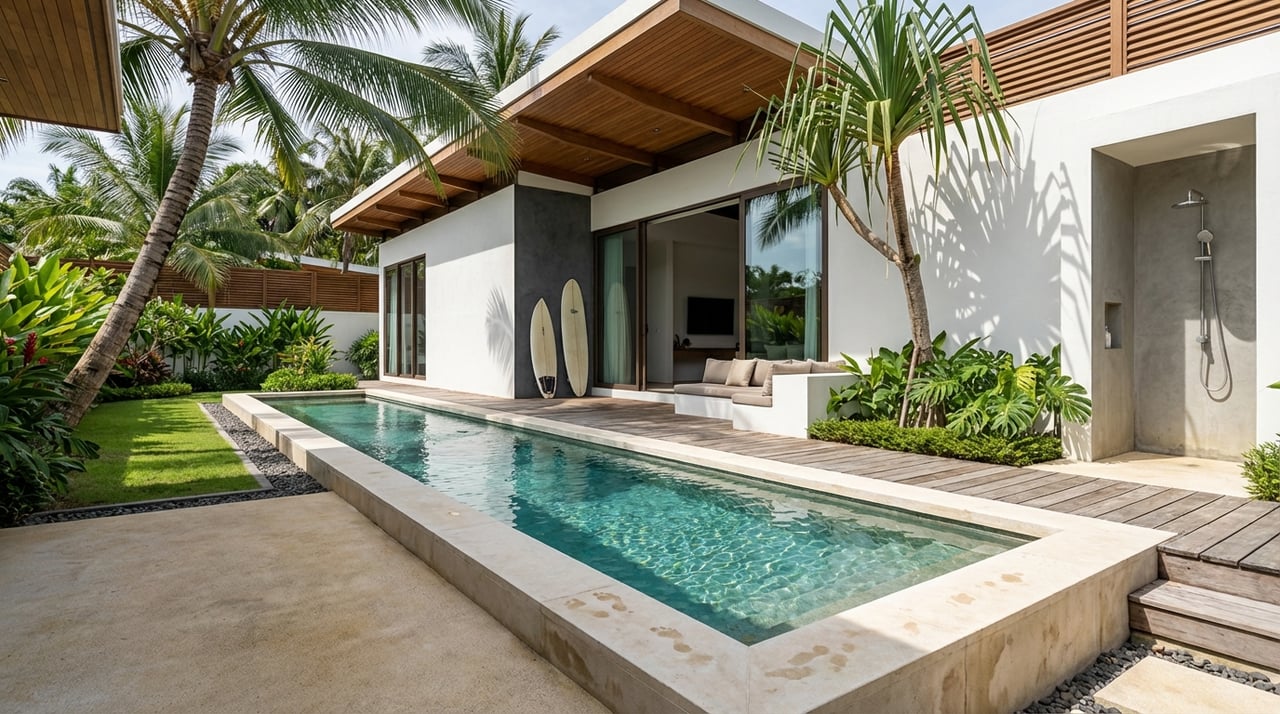
You want your Uvita villa to deliver both lifestyle and dependable rental income. The challenge is cutting through glossy photos to see real numbers, real risks, and what it takes to operate at a luxury level. In this guide, you’ll learn how to evaluate villas around Uvita for short-term rental ROI using clear metrics, a simple stress test, and a focused due diligence plan. You’ll also get an operations checklist so you know what it takes to run a five-star guest experience. Let’s dive in.
Why Uvita draws luxury renters
Uvita anchors Costa Rica’s southern Pacific Costa Ballena, celebrated for Marino Ballena National Park with its Whale’s Tail, waterfalls, surf near Dominical, and rich biodiversity. These natural assets create steady interest from eco-minded travelers, multigenerational families, wellness groups, and high-end visitors who value privacy and ocean views. Villas with strong views and private amenities can command premium rates.
Luxury travelers often book through a mix of channels. You will see Airbnb and VRBO, but higher-end stays rely more on direct bookings, travel advisors, and concierge referrals. That mix can lead to larger block bookings for holidays, retreats, and events, which lift revenue when managed well.
Seasonality you should model
Peak demand typically aligns with the dry season from December through April, including Christmas and New Year and Easter/Semana Santa, when both occupancy and ADR climb. Whale-watching windows create demand spikes in two periods each year, roughly July through October and again December through April. The rainy months from May through November usually bring softer occupancy and rates, though luxury guests still travel at seasonal prices.
The key takeaway is to model revenue monthly rather than annually. Expect meaningful swings in occupancy and ADR from one month to the next. Targeted pricing, length-of-stay rules, and channel strategy help smooth those swings.
Build a clear revenue model
Key metrics to know
- ADR: average daily rate. Total rental revenue divided by nights rented.
- Occupancy rate: nights rented divided by nights available.
- RevPAR: ADR multiplied by occupancy. A quick way to compare performance.
- Gross rental yield: annual gross revenue divided by purchase price.
- Net operating income (NOI): gross revenue minus operating expenses before financing and income taxes.
- Cash-on-cash return: annual pre-tax cash flow after debt divided by cash invested.
Expense lines to include
- Property management: commonly 18 to 35 percent of booking revenue for full service. Scope and add-ons matter.
- Cleaning and turnover: per-stay cost that grows with bedroom count and service level.
- Utilities: electricity, water, internet, and gas. Pools and AC can be material line items.
- Routine maintenance: budget 5 to 10 percent of gross revenue as a baseline, higher for older or complex properties.
- Insurance: property and liability, with attention to STR use and coastal location.
- Taxes and fees: accommodation-related taxes, VAT where applicable, municipal licenses, property taxes, and income tax.
- CapEx reserves: 5 to 10 percent of revenue or a fixed annual fund for furniture and equipment replacement.
Three-scenario stress test (illustrative)
Use local comps for actual ADR and occupancy, then run three cases. The example below uses Uvita luxury villa ranges from the research for illustration only. Replace with the villa’s real data when available.
Assumptions:
- ADR range: conservative 600 dollars, base 900 dollars, optimistic 1,200 dollars.
- Occupancy: conservative 110 nights, base 183 nights, optimistic 256 nights.
- Management fee 25 percent of revenue; cleaning 300 dollars per stay; maintenance 7 percent; utilities 8 percent; CapEx 6 percent; insurance and taxes 5 percent.
- For cleaning count, hold the same average length of stay used in the conservative example (about 1.83 nights per stay) to keep math consistent.
Conservative scenario
- Gross revenue: 600 dollars × 110 nights = 66,000 dollars
- Management: 16,500 dollars
- Cleaning: 60 stays × 300 dollars = 18,000 dollars
- Maintenance 7 percent: 4,620 dollars
- Utilities 8 percent: 5,280 dollars
- CapEx 6 percent: 3,960 dollars
- Insurance and taxes 5 percent: 3,300 dollars
- Estimated NOI: about 14,340 dollars
Base scenario
- Gross revenue: 900 dollars × 183 nights = 164,700 dollars
- Management: 41,175 dollars
- Cleaning: 100 stays × 300 dollars = 30,000 dollars
- Maintenance 7 percent: 11,529 dollars
- Utilities 8 percent: 13,176 dollars
- CapEx 6 percent: 9,882 dollars
- Insurance and taxes 5 percent: 8,235 dollars
- Estimated NOI: about 50,703 dollars
Optimistic scenario
- Gross revenue: 1,200 dollars × 256 nights = 307,200 dollars
- Management: 76,800 dollars
- Cleaning: 140 stays × 300 dollars = 42,000 dollars
- Maintenance 7 percent: 21,504 dollars
- Utilities 8 percent: 24,576 dollars
- CapEx 6 percent: 18,432 dollars
- Insurance and taxes 5 percent: 15,360 dollars
- Estimated NOI: about 108,528 dollars
Use these outputs to compute gross yield and NOI yield based on the purchase price. Then layer in your financing to estimate cash-on-cash return.
Sensitivity check
Test ADR up or down 10 to 20 percent and occupancy up or down by 10 percentage points. Because revenue is ADR times occupancy, small changes can produce big swings in returns. Define a downside threshold that still covers debt service and your base cash flow target.
Property due diligence: docs and inspections
Before you fall in love with a view, confirm the fundamentals. Ask for clear documentation and a focused site review.
Documentation to request
- Title deed and cadastral registry, with boundary confirmation and any encumbrances.
- Municipal tax receipts and proof of current property tax payments.
- Building permits and municipal approvals for all structures, including pools and terraces.
- Utility account history and any outstanding balances.
- If condominium or HOA, obtain bylaws, fees, reserve funds, rental rules, and recent meeting minutes.
- Short-term rental performance: 12 to 24 months of bookings by date, ADR, occupancy, channel, platform fees, and net revenue after management.
- Insurance policies and any claims history, plus vendor contracts and guest waivers or house rules.
On-site inspection focus
- Access and road condition: paved or unpaved, seasonal washouts, and easements or maintenance duties.
- Water: municipal vs private well vs delivered, storage tanks and filtration.
- Septic: system capacity, maintenance records, and compliance.
- Electrical: capacity, grid reliability, and presence of generator or solar with inverter.
- Internet: bandwidth and redundancy for streaming and remote work.
- Structure and site: roof, salt corrosion, termites or wood-borers, drainage, retaining walls on slopes.
- Pool and mechanicals: age, service records, and replacement schedules.
- Privacy and views: current view corridors and risk of future obstruction.
- Safety: emergency access and proximity to clinics or hospitals.
Market and comps check
- Review active and recently booked luxury STR listings within 5 to 20 kilometers by bedroom count, amenities, views, ADR, and seasonal occupancy.
- Scan guest reviews for patterns like difficult access, mosquitoes, or power reliability.
- Confirm proximity to key demand drivers including beaches, park entrances, restaurants, and airports.
Rules, taxes and environmental factors
Short-term rental use can be treated as a commercial activity in Costa Rica. You should confirm requirements with local professionals and the Canton of Osa municipality.
Permits, registration and taxation
- Business license: check municipal licensing for transient accommodation and local taxes.
- VAT: Costa Rica applies a value-added tax to many goods and services. Confirm whether VAT applies to your lodging, who files, and invoicing rules.
- Income tax: rental income is taxable. Treatment varies by residency and legal structure. Electronic invoicing may apply.
Environmental protections
- Maritime-terrestrial zone: coastal setbacks and rules can restrict building and beach access. Confirm that no part of the property encroaches into protected areas.
- National park proximity: development and activities near protected areas may require special approvals.
- Slope and drainage: hillside properties may need environmental impact permits and careful erosion control.
Insurance and liability
- STR coverage: ensure insurance covers short-term rental guests and commercial activity.
- Natural hazards: review flood and landslide exposure and price relevant coverages accordingly.
Operations and management
Running a luxury villa is a hospitality business. Clear standards and the right partners protect your brand and returns.
What a professional manager provides
- Listing creation and optimization, dynamic pricing, and channel management.
- Guest communications, 24/7 support, check-in and checkout, cleaning and linen standards.
- Maintenance coordination, inventory control, local vendor network, and emergency response.
- Financial reporting, accounting for channel payouts, and support with invoicing and tax compliance in some cases.
How to choose a manager
- Transparency: ask for sample monthly statements and booking reports and confirm reporting cadence.
- Portfolio and references: confirm experience with villas similar to yours and speak with current owner clients.
- Fees and terms: compare percentage fees, onboarding costs, cleaning markups, exclusivity, and cancellation terms.
- Marketing reach: review photography, listing content, channel mix, and partnerships with travel advisors.
Staffing and systems
- Local staff: expect a mix of on-site or on-call manager, housekeepers, gardener, and pool technician.
- Guest experience: private chef, concierge and tours can add revenue but require coordination.
- Systems: professional photography, synchronized calendars, a clear guest manual, and preventative maintenance schedule.
Exit strategy and liquidity
Proven STR income, permits, and strong online reviews can support premium resale pricing for turnkey villas. Liquidity depends on buyer pool and macro conditions, so maintain clean financials and documented performance.
Red flags to watch
- Missing or unverifiable booking history.
- Seasonal road issues or poor access that affects arrivals and operations.
- Incomplete permits for structures, pool, or septic.
- Heavy reliance on a single booking channel or single repeat group.
- Insurance that does not cover STR use.
- Environmental encroachment into restricted coastal zones.
- High capital repair needs without a reserve plan.
A practical step-by-step plan
Request 12 to 24 months of raw booking data and a full P&L including channel fees and cancellations.
Run the three-scenario stress test using the villa’s actual ADR and booked nights.
Order a title search and confirm permitted uses with the Canton of Osa. Verify no liens or unresolved issues.
Schedule a focused site visit to inspect access, water and electricity, septic, internet, pool equipment, and structure.
Interview two to three local property managers for live quotes on management percentage, cleaning costs, and occupancy expectations. Review sample reporting.
Consult a Costa Rica tax advisor and a local attorney to confirm VAT, income tax, invoicing, licensing, and contract language.
By taking a rigorous, data-first approach, you protect your downside while leaving room for upside from strong seasonality, retreats, and direct bookings. If you want tailored guidance on specific villas, local managers, and compliance steps, connect with our team for a discreet, investment-focused consultation.
Ready to assess a property or build a shortlist around your target returns? Reach out to Jorge Elizondo ( CIRE Costa Rica South Pacific) for concierge-level advisory, market insights, and in-region coordination.
FAQs
What makes Uvita attractive for luxury short-term rentals?
- Uvita sits on the Costa Ballena near Marino Ballena National Park, with beaches, wildlife, waterfalls, and surf that draw high-end travelers seeking privacy, views, and eco-focused experiences.
How does seasonality affect income in Uvita?
- Peak demand and rates align with the dry season from December to April and holiday weeks, with additional whale-watching peaks, while rainy months usually show lower occupancy and ADR.
What management fees should I budget for a Uvita villa?
- Full-service property management often ranges from 18 to 35 percent of booking revenue, with the scope of services and add-on fees influencing the final cost.
Which expenses are most often underestimated?
- Cleaning and turnover for larger villas, electricity for AC and pools, routine maintenance, and reserves for equipment replacement are commonly under-budgeted.
Do I need a business license or to collect VAT on rentals?
- Short-term rentals may require a municipal business license and compliance with national tax rules, including VAT and electronic invoicing, so confirm with local professionals.
What environmental checks should I do for a coastal villa?
- Verify no encroachment into the maritime-terrestrial zone, review any park-related restrictions, and assess slope stability, drainage, and erosion controls for hillside sites.
How do I evaluate a villa’s booking history and pricing?
- Ask for 12 to 24 months of booking data by date, channel, ADR, occupancy, and net revenue, then compare to local comps and review guest feedback trends across channels.